A Mountain Monk
A Mountain Monk Life and Death
Life and death cannot be separated. They’re joined at the hip. When we try to separate them and celebrate life while fearing and rejecting death, we end up living an artificial imaginary life. This only leads to suffering as reality always presents itself no matter how tightly we cling to our illusions.
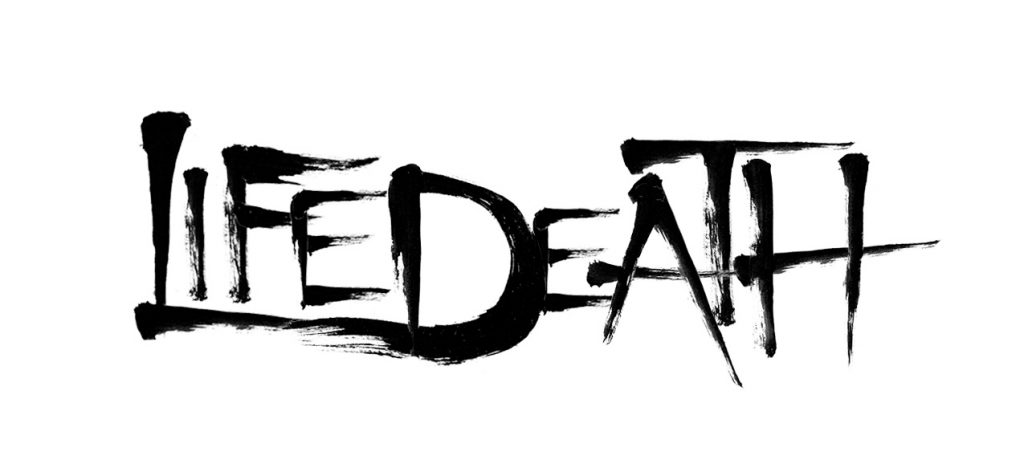
It’s important to accept life and death as one, as they cannot be separated. In this calligraphy, I painted life and death as one word LifeDeath. If we think of it in this way, we will not stray from reality.
We cannot truly understand life without understanding death. We cannot understand death without understanding life. The two cannot be separated. Instead of depressing us, our understanding, accepting and embracing death as a fundamental reality of life leads to a deep appreciation of every moment of life. It’s temporary. We might as well fully enjoy each and every moment as they won’t come around in exactly the same way ever again.
Our culture has conditioned us to celebrate and believe in youth, newness, and a youthful, perfect beauty that never changes or fades. We avoid images of death and decay because they expose our conditioned illusions. Our illusions crumble in the face of too much truth.
We don’t like to think our minds have been conditioned. We like to think that our thoughts are ours. Those of us who have spent time in the advertising industry or in other areas of mass media know very well the power of the media to condition beliefs, opinions, preferences and desires. Media shapes the way culture thinks and feels. It is unnatural for us to think and feel about life and ourselves the way we do. These thoughts and beliefs have been conditioned by our culture.
Conditioning
I admit to once being a Creative Director of a large advertising agency. I apologize for this. It’s a poor excuse, but it’s hard to make a decent living as an artist and I had a family to support. Knowing the powerful influence we had over the way the population thinks and feels, most of us imagined we were immune to this. One week I decided to test myself to see if this were true. I decided that if I had a strong desire to purchase anything I had seen in an advertisement, I would wait one week before acting on this desire. During that week I would simply watch my mind each day. I was shocked to discover that I was just as conditioned as anyone else. Not much different from Pavlov’s dogs. When the right triggers were given, I would salivate just like those dogs. After the results of my experiment, I began to take the responsibility for what I was doing far more seriously. Eventually I left the business.
Wabi-Sabi
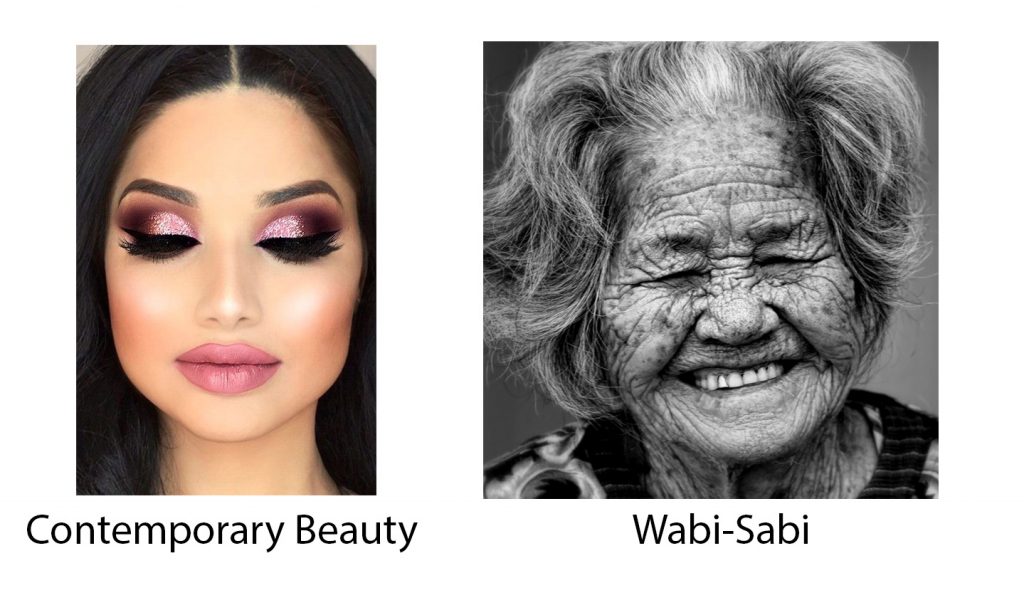
The Japanese wabi-sabi aesthetic is one way to de-condition ourselves and learn to live in reality. Wabi-sabi celebrates the impermanent, the natural, the changing nature of life. It sees that life and death are not separate. Where our contemporary culture celebrates youth and this idea that people and things can be permanent, wabi-sabi celebrates reality. Everything is changing. Youth become old age. The new car becomes the old one. There is nothing wrong with this. It is the reality of life and it is profoundly beautiful. If we can let go of our conditioning, the beauty of life as it really is becomes clear.

Where our culture attempts to cover up and hide the reality of death and impermanence, wabi-sabi celebrates it. Instead of turning away from the wrinkles in this woman’s face or attempting to cover them up with make-up or Photoshop retouching, can you see the profound beauty in these wrinkles, these symbols of a life truly lived. Seeing the beauty in this is wabi-sabi.
My Grandmother Rozie
My grandmother was an amazing woman. I was truly fortunate to have her in my life. As I knew here in her 70s and 80s, she didn’t act the way other women her age acted. She didn’t dye her hair or go to a beauty salon in an attempt to look younger. She never wore makeup. She barely combed or brushed her hair. It was usually a tangled mess. She cared nothing about the latest clothes. She usually wore the same sweater filled with holes. But there was an aliveness about her and great joy. It was wonderful to be with her and everybody felt that way. She loved people. She loved life. And she loved me.
Freedom From Fear
My grandmother gave me the greatest gift that any human can give to another. She taught me not to fear death. When she was in the process of dying and had at most a month left to live, she told me about her decision not have any medical attention for her stomach cancer. She said she had seen her friends go through surgery and treatment and it just wan’t for her. She told me she had lived a wonderful life (She was eighty-five at the time I think.) and she was ready to go. It was very clear that she had no fear of death at all. It wasn’t because of any religious belief or belief in an after life. I don’t think she really cared about that. She had enjoyed a long life and now she was ready to go. She accepted her death fully without any reservation at all. It was as natural as getting up in the morning and brushing her teeth.
I was in my early 20s at the time. Up until that conversation I had been influenced by the media and my society to fear death or at least think it was a negative thing. But my grandmother’s complete lack of any fear changed that. It wasn’t all at once, but it began a process of changing my previous conditioning. In all my media experiences of death, nobody every faced it as something completely natural and nothing to fear. My grandmother did. And I will always be grateful for that.
Until we can fully accept death as the natural process and inevitable end of our life, we cannot fully accept life either. That fear of death holds us back from fully living. My grandmother lived her whole life free of that. That’s why she lived so fully. That’s why she accepted everything in life. She accepted her aging gracefully without trying to appear younger. She accepted and thoroughly enjoyed every moment of her life. And she accepted her death just as gracefully, naturally and completely. My grandmother was a prime example of wabi-sabi in action. Her life itself was a work of art. I was very privileged to have seen it and been a part of it.
Love What Is
Wabi-sabi and Zen itself doesn’t reject youth in favor of the old. It accepts everything. It appreciates and is grateful for everything in every moment. Because of our conditioning we favor youth over old age. We favor wrinkle-free skin over wrinkles. We favor the shiny and new over the rusting, deteriorating and old. Because of this we are out of balance. We don’t need to practice accepting what we already accept. That’s already done. We need to practice accepting and appreciating what our conditioning has taught us to reject and fear. That’s where the Japanese aesthetic approach of wabi-sabi can help us. It can return us to a natural way of life, free of the conditioning that has forced us out of balance with nature and reality.
The thoughts we have that reject and fear some aspects of life are not our thoughts. We didn’t create them. We were conditioned by society, by men and women like me in the advertising and media worlds. We would never tell you that wrinkled skin is beautiful in a woman because there is no profit in that. Wrinkles are free. They are a natural part of aging. We would never tell you that the shiny new car we’re trying to sell you will begin to rust and need repairs in a few years. Rust and deterioration are a natural part of life. That’s reality. Advertising doesn’t deal in reality. There’s no profit in it.
To live a natural, balanced and healthy life, we need to live in the real world, not the world of our conditioned thoughts. When we accept, honor, appreciate and love life as it really is, whatever that may be, without trying to change it or wish it were different, we will live a life of true happiness. The world perceived through our conditioned thoughts cannot give us that.
Seek and Ye Shall Not Find
We’re all seeking something. Until we’re not. As long as we’re seeking bliss, peace, unconditional love or spiritual enlightenment, we’ll never find it. Seekers are not finders.
We get this idea that we can find bliss, peace, love and spiritual enlightenment the way we find other things in our life. If we’re seeking a new car, we go to a car dealership. If we’re seeking a new house, we go to a Realtor. If we’re seeking an education we go to a university. If we’re seeking a meal, we go to a restaurant. We’ve been conditioned to believe that seeking and finding are connected. As long as we keep seeking eventually we’ll find.
Teachers and Retreats
So if we’re seeking enlightenment, why shouldn’t we go to a spiritual teacher, an ashram or monastery? Why shouldn’t we pay a thousand dollars for a week-long enlightenment retreat? Surely for a thousand dollars we should be able to get enlightenment. Unfortunately the only thing lighter after this retreat will be our wallet.
Seekers Remain Seekers
When it comes to bliss, peace, love and spiritual enlightenment, that’s not how it works. Seekers do not become finders. They simply remain seekers. You may have noticed this already in your own seeking. It sounds counterintuitive, but it’s only by giving up seeking, by giving up what is being sought and by giving up the one who is seeking that you actually find what you’re seeking.
Enlightenment Is Not a New Car
If you want a new car, you can find a variety of cars at a car dealership. But bliss, peace, love and spiritual enlightenment are not cars. You cannot simply go to a spiritual teacher or attend an enlightenment retreat and get enlightenment. You may get a very superficial and temporary taste of peace, love, bliss or enlightenment. And that’s usually what’s being sold. That keeps you coming back for more. It’s a good business practice. But you won’t get the real thing. You can’t get the real thing in this way. If you got the real thing, you wouldn’t need to come back again. Your seeking would be over.
Your Car Is the Only Car That Exists
Imagine that you want a new car, but the only car that exists is the very one you’re driving. There are no other cars. No other car exists. You have the only car in all existence. Your desire for this imaginary non-existent car is your seeking. Can you imagine the suffering and frustration that comes from seeking this non-existent car? It doesn’t exist. How can you find what doesn’t exist?
And yet, thanks to your illusion, you fail to realize that you’re driving the only car that actually does exist. So you have an existing car, but you’re seeking a car that doesn’t exist. That’s exactly the situation of spiritual seekers.
You’re seeking something imaginary that doesn’t exist. Your idea of bliss, peace, love and spiritual enlightenment are just ideas. They are not reality. And yet true bliss, peace, love and spiritual enlightenment are always right here. They’re not what you imagine them to be, nor can they be what you imagine them to be. That’s because they’re not thoughts; they’re real.
When you let go of all thoughts about peace, bliss, love and enlightenment, when you let go of all thoughts about you and what you are, when you empty your mind of all illusion, you realize that peace, bliss, love and enlightenment are right here and have always been right here. You have never for a single moment ever been apart form them. Even in the depths of your greatest suffering, everything you were seeking has always been here. Your illusions and all that seeking have simply hidden it from you. That realization is the end of seeking. You are now a finder. You have returned to a Home you never could have left.
You didn’t do this through seeking. You did it through the end of seeking. You did it through the surrender of illusion and openness to what is always right here now. You not only found enlightenment, but you saved a thousand dollars in the bargain.
Your Past Never Happened
Your past never happened, at least not the way you think it did. This is quite a profound realization. It is extraordinarily healing. And it is very true as you will soon see.
Many of us are not yet able to deeply experience the present moment, but, if you are, try this. Allow yourself to simply be fully present. Let all past worries and concerns melt away. Be here now. Allow your attention to soften and expand, taking in more of what is here. Notice that your awareness is actually very vast and has no boundaries or limits. You are aware of what you see, hear, sense and feel. But even more than this, you are aware of awareness itself, of being awareness itself beyond any limitations of a separate self. In this vast awareness, this is what is happening right now.
Now imagine if you could capture this experience of presence in a memory or thought. How could you? It is far too vast and inclusive to be contained in any thought or memory. There is just far too much here. What was really happening in your past was this, this vast, all-inclusive presence. And no memory could ever capture this.
If you were to sit down with five people you shared a moment in the past with and deeply discussed your experiences of that event, you would find that there were five different memories of that event. How can this be? Each person has a different memory. On the very superficial level, it may seem like you are speaking about the same event. But, as you go deeper, it is clear that each of you have a different impression of that past event, a different memory. Each of you was affected in a different way. To you, your memory of that event is the correct one. You know that is what happened. It is your memory, so it must be true. That is your experience.
But is it?
Memories
Memories are interesting things. They are like a tiny fraction of what actually happens. When we truly experience presence, we realize it is impossible to place that experience into a memory or even a thought. A memory is just a thought attached to and held on to for a period of time. The original thought is not even one percent of what was actually happening in that moment. Over time this thought deteriorates and changes a great deal, making memories even less accurate than the original thought that occurred in that moment. Many studies have been done showing the extremely poor accuracy of memories.
Problems With Eye Witness Testimony
Stanford Law School
The original thought was only your limited impression of what occurred in that moment. Like all thoughts it is only a limited abstraction of the fullness of the moment. The moment is interpreted through the limited perspective of a limited, separate self – you. It is not an impression of the moment that takes in everything that is happening and everyone else’s perspective. That would be far more accurate.
Change Your Memory / Change Your Past
Let’s say you have a childhood memory of being punished or severely scolded by a parent. Your memory of this may be that the parent was cruel, unfair and didn’t even love you. This is the very limited perspective of a child. Yet you may keep this memory of your childhood all the way up into your adult life. This is your memory of childhood. And you are totally convinced this is the way it was. This becomes part of the story of me, of who you are. This is why I am the way I am today. You may have told this same story to many people. And you keep telling it today, both to others and to yourself. On each telling, it feels more real, more solid, more true.
Now what if you looked at that same memory and simply expanded it just a little. You know your childhood perspective. That’s what your memory is. But what if you expanded it just a little to include your parent’s perspective? Is it really true that your parent was cruel, unfair and didn’t love you? Were there any moments in your life when your parent was not cruel and unfair, when they showed that they did love you? Did that ever happen? If you can remember any moment when your parent did love you, then perhaps they still loved you at the moment they were punishing you or scolding you. If you have become a parent yourself, you will understand this. Perhaps they were actually punishing or scolding you in that moment because they loved you. Maybe they were not as skillful as they could have been. If you are now a parent yourself, you know how that goes.
See if you can remember that same event, but now include your parent’s perspective too. This will open up and expand your memory. It will actually change your memory and thus your past. Instead of only the memory of one person – you, you are including the memories of the other people involved. In this way, a more accurate representation of the past begins to form. If you are able to be present, you know this is still a very limited representation of the past. No accurate memory of the past is possible because no thought or memory can include all that is in any moment. Thoughts and memories can only encompass a very small and limited piece of the whole scene.
The memory of your parent scolding you probably does not also contain the sound of the bird chirping outside your open window, or the feel of the breeze on your skin coming through that same window. It probably doesn’t include the spider crawling across the wall behind your parent’s head or the small crack in the paint that wasn’t there just the day before. And, as we already mentioned, it probably doesn’t include the feeling of great love and concern your parent is feeling toward you that is prompting this fear and anger that you did experience. There is infinitely more that your memory does not include. It is like reading a great novel and out of the entire book only remembering that a body was scolded by his father or found a quarter on the street. All the other characters and events were completely forgotten, to say nothing of their perspective on all the events.
By freeing your memory from the prison of its limited perspective and opening it even a little more fully, your impression of your past will change completely. It will still be very limited, but far less limited than it is now. As you continue doing this, eventually your memories as something real will simply dissolve. You will realize that the past and present are exactly the same. There is only this full experience of the present moment always and forever. It includes everything, not only every perspective, but literally everything.
This is why I say that your past never happened. You may have pictures pasted into a photo album to prove that you were at one time a young child. And even that you had a bizarre haircut in one picture. Yes, that is true. But your memories of that time are not really what was happening back then. And the pictures are still going to be seen through those memories, until you change the memories, which you now see is very possible. What was happening back during the time that photograph was taken, was exactly what is happening right now. It was just a present moment, full of everything that exists. Just as it is right now.
Is It True?
If memories of your past are causing you problems or suffering today, take a closer look at those memories. Are they really true? Are they accurate? Is what you remember everything that was happening back then or just a very tiny piece of it? And has even that tiny piece of your original experience remained the same for all these years? Or has it, instead, shifted and changed to make the story more dramatic and interesting, to make you more interesting, to make you the focus of the story, to make you the focus of all stories? What, if anything, of that memory that seemed so important to you is actually true?
And, if it isn’t true, why continue holding on to it? If you can see that this memory isn’t true, that, at best, it only holds the tiniest sliver of what was actually occurring back then, then perhaps the other memories are also not true. Perhaps the whole story of your past, of who you think you are, is not as true as you once thought. Don’t be frightened. This is actually a good thing. It’s a wonderful thing. It is very freeing. As your belief in your past begins to crumble and fade, your experience of presence opens up. Your experience of your True, Unlimited Self begins to come forward and be revealed.
The Only True Healing
There is nothing that can be more healing than this, than the truth of things as they actually are. When you no longer identify with this separate, independent self, created out of all the stories, thoughts and memories of your past, all those old traumas just fade away. This is true healing. This heals everything. It heals the story of the separate self that experienced all those traumas and suffering. In presence, in life as it actually is, there are no problems. There is no suffering.
In Zen, we call carrying memories of the past into the present “dragging a corpse with us.” Until we free ourselves of attachment to our memories, thoughts and beliefs, it is as if we are carrying a corpse with us wherever we go. Our memories of the past create a thick veil over the present so we cannot perceive life as it is in each moment. Our experience of the present is filtered through the past preventing us from directly experiencing it as it is. Only by surrendering these attachments can we wake up and see the world as it is. But this can be done. You can do this. Simply by looking deeply at your memories and honestly questioning their truth just as we’ve done here, your attachments will dissolve. You will let go of what is not true and make room for what is. You will come into alignment with truth. And this is the only healing you will ever need.
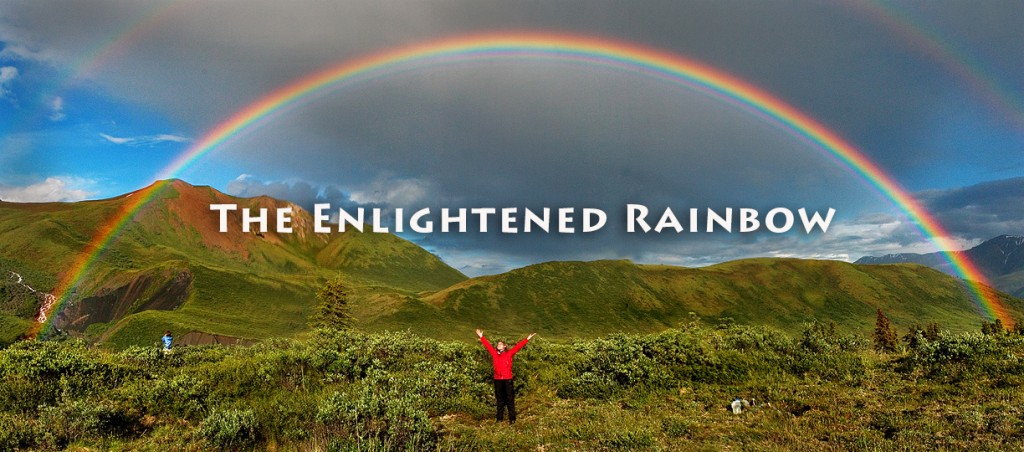
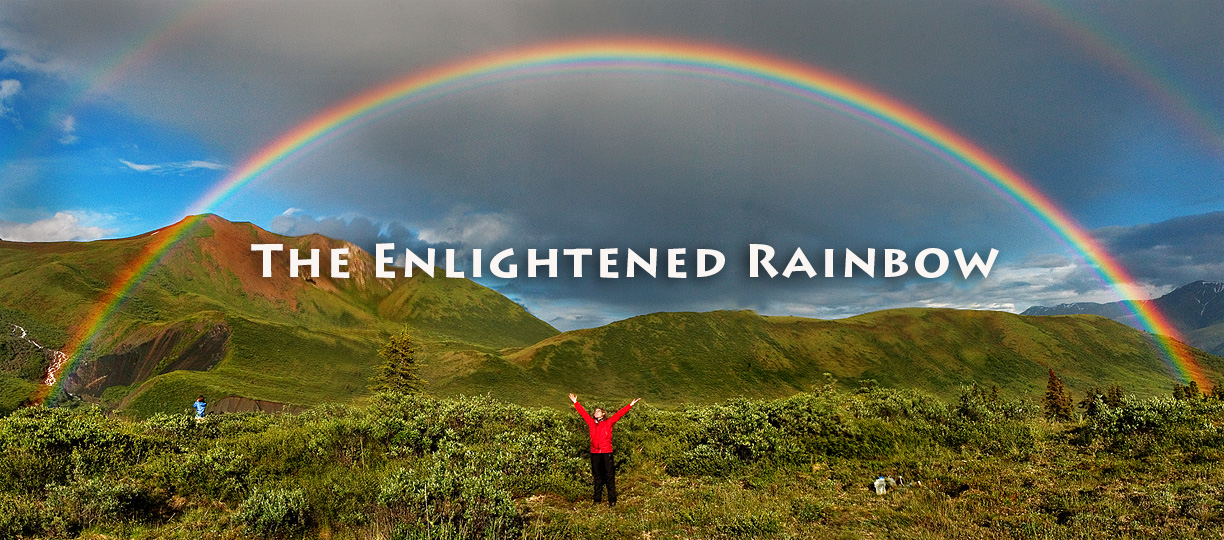
The Enlightened Rainbow

Most of us love rainbows. They are beautiful. And they also have much to teach us about life and truth. One of the reasons we love rainbows so much is because they are clearly so temporary. As soon as the sun sets, where is the rainbow? When there is less moisture in the air, where is the rainbow? Rainbows usually don’t even last for a full hour or even close to it. They appear like magic and disappear just as quickly. And this is why we love them. It’s a wonderful treat to see a rainbow because they are rare and very temporary. You better look while it’s there because it won’t be here for long.
And this temporariness is part of a rainbow’s great beauty. If a rainbow lasted for days or years, it would not have the same impact. We’d begin to take it for granted. “Oh, yes that old thing. It’s always there.” The short life of each rainbow is a big part of its appeal.
Everything Changes
The temporariness of a rainbow points to a very important fundamental truth about all of life. It’s temporary. If you have grown children, you can remember and even have photographs of them when they were just born. They were so cute and tiny, usually weighing less than ten pounds. You could hold them in one hand. Imagine if their body remained that same size throughout their life. It would seem pretty strange when they were twenty and still weighed less than ten pounds. So the body of your child has been changing all the time. At one point they could neither walk nor talk. Now they may never seem to shut up. 🙂
Everything in life is changing. Your body will also not remain the way it is today. The lifespan of a rainbow may only be a few minutes. The lifespan of your body, including all its changes, may be eighty or ninety years. There is a difference between the lifespan of a rainbow and the lifespan of a human body. But both are impermanent. Both begin and end. It is only a matter of how long this takes.
No Separate, Independent Self
There is something else very important about rainbows. They cannot exist without certain elements existing. If there is no sunlight, there is no rainbow. Rainbows don’t occur at night. If there is no moisture in the air, rainbows also can’t occur. Rainbows depend entirely on other things for their very existence, like sunlight and moisture in the atmosphere, among many other things. I think this is pretty clear.
We all understand this about rainbows, but we don’t really consider how much this is also true for ourselves. Just like a rainbow, there are many things that are absolutely necessary for our existence. Our body could not exist if our parents had never met for instance. And then of course there is air, water and food. It is obvious that this body could not last long without these essentials. Most of us don’t consider all the things that the very existence of this body depends on when we think of our body and ourselves as separate and independent. Just as a rainbow cannot be separate and independent from sunlight and moisture, we cannot be separate and independent from the many things that are necessary for our existence.
The Three Seals
In Buddhism we call this the realization of non-self. Not only rainbows and bodies cannot exist separately and independently, but nothing can. The realization of non-self and the realization of impermanence are two of the universal truths that lead to awakening. These are known as two of the Three Seals. They are called Seals because they represent universal truths. The third of the Three Seals is Nirvana or the extinction of all concepts. Concepts, thoughts and language all divide the world up into separate and independent things. Since no separate and independent thing can actually exist, all concepts are fundamentally false. When all concepts are let go, we encounter the truth of life directly.
Nirvana
When we realize fully that a rainbow is impermanent, that it is changing all the time, even while we can still see it, and that it cannot exist independently and separately from all the other elements that are necessary for it to exist, then our concept of a rainbow dissolves. Only then can we truly see a rainbow for what it is, not separate from anything else in the universe. This is true seeing. This is the seeing of Nirvana. Each of these Three Seals (universal truths) we can realize from deeply observing a rainbow. We can actually learn this from deeply observing anything because everything contains the same universal truth. But observing a rainbow might be more fun, if you like that sort of thing. 🙂